Tiếng Anh•Tài liệuĐã có lời giải

Question 13: a. Leo: Not if we rinse them out first. The leaflet says clean containers are recyclable, but foo...

◉ 0 lượt xem◷ Đăng ngày 28/09/2026▤ Câu số 3
HN

Nguyễn Hoàng Nam

Thành viên cộng đồng

Question 13:

a. Leo: Not if we rinse them out first. The leaflet says clean containers are recyclable, but food waste goes to the compost pile.

b. Amy: That clears it up. I’ll remind our group to sort the lunch waste before the bell.

c. Amy: The Green School board says we should cut down on landfill waste, but I’m unsure about yogurt cups.

A. c – a – b        B. a – c – b        C. c – b – a        D. b – a – c

Question 14:

a. Mike: Then I’ll add a bright tag near the tap, so they know where “off” is.

b. Mike: A small leak can waste a lot. Is the pipe broken, or is someone forgetting to switch it off?

c. Sara: Good. I’ll explain the plan to Mr Clark and ask him to put it on Monday’s green notice.

d. Sara: The garden tap is dripping after football, and the water tray is full again.

e. Sara: The pipe is fine; younger students just turn it halfway and think it is off.

A. e – a – d – b – c        B. d – b – e – a – c        C. d – b – c – a – e        D. e – b – d – a – c

Question 15:

Dear Customer Service Team,

I am writing to complain about the packaging used during your “Green Shopping Weekend”.

a. Later, at the checkout, each snack box was put into another plastic bag, although the label said “low-waste choice”.

b. This made the campaign feel misleading, so I left some items behind and chose loose fruit instead.

c. Last Saturday, I visited your store because the posters promised eco-friendly shopping.

d. I hope your store will reduce unnecessary packaging and give customers clearer information in future campaigns.

e. When I entered the store, many products on the special display were wrapped in two or three layers of plastic.

I look forward to your reply.

Sincerely,

Lily

A. c – a – e – b – d        B. c – e – a – b – d        C. a – c – e – b – d        D. c – e – b – a – d

Question 16:

a. To avoid arguments, we placed reminder notes near switches and agreed that the last person leaving a room would switch off the lights.

b. My family used to think saving electricity meant sitting in a dark house, so no one liked the idea.

c. In the long term, the best result was not only a lower bill but also a quieter routine with fewer glowing screens.

d. We changed our minds when Dad showed us the amount of energy wasted by the air conditioner, the router, and old bulbs.

e. As a result, we replaced two bulbs with efficient ones, set the air conditioner higher, and cut down on late-night screen time.

A. b – d – a – e – c        B. b – a – d – e – c        C. d – b – a – e – c        D. b – d – e – c – a

Question 17:

a. However, the food delivery was less visible, because each small order used packaging and a motorbike trip that released emissions into the air.

b. A few students predicted that the school bus would be the main cause, since it looked bigger and less eco-friendly than their phones.

c. The activity did not make us feel guilty or blame one person; it made our club more resourceful, and we now combine orders, reuse containers, and walk when the distance is short enough.

d. Our environmental club measured one Friday afternoon to see which normal habit added most to our carbon footprint.

e. The numbers were surprising: shared transport spread its emissions among many people, while repeated online snacks created more waste per student.

A. d – b – e – c – a         B. d – a – b – e – c        C. b – d – a – e – c        D. d – b – a – e – c        

MT

Thầy Minh Tuấn

Chuyên gia

Đã trả lời ngày 28/09/2026

Câu hỏi HOT cùng chủ đề

Tiếng Anh

THE RIPPLE JAR CHALLENGE Can one jar change a neighbourhood? Could one rinsed jar change what a bloc...

Đề bài

THE RIPPLE JAR CHALLENGE

Can one jar change a neighbourhood?

Could one rinsed jar change what a block throws away? The Ripple Jar Challenge is a city campaign for residents (1) __________ small choices are recorded on a shared map. By scanning the jar code, each household can (2) __________ a real dent in household waste before it reaches crowded landfills.

What happens after you join the ripple?

∙        Community points unlock new (3) __________ near apartment gardens.

∙        Weekly reports show the (4) __________ in food waste after sorted leftovers are added to compost piles.

∙        Eco-checks take only ten seconds (5) __________ before you leave home.

A tiny action, a visible result

Local volunteers are responsible (6) __________ checking clean jars, compost areas, and recycling corners every Friday. Add one jar, one lid, or one portion of leftovers today—and watch a quiet habit become a neighbourhood-wide transformation.

Question 1: A. who        B. which        C. whose
D.  
where

Question 2: A. take        B. make        C. keep
D.  
draw

Question 3: A. compost community bins        B. bins community compost


C.  
community bins compost        D. community compost bins

Question 4: A. reduce        B. reduced        C. reducing        D. reduction

Question 5: A. complete        B. to complete
C.  
completing        D. to completing

Question 6: A. for        B. with        C. of        D. on

Tiếng Anh

Don’t Be Fooled by Fake Green Labels! Many companies now sell products as “green”, but some only use...

Đề bài

Don’t Be Fooled by Fake Green Labels!

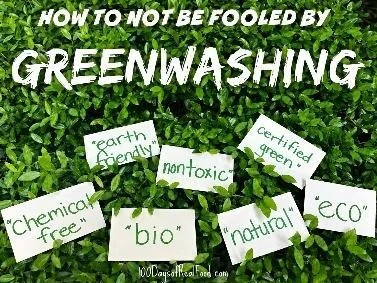
Many companies now sell products as “green”, but some only use leaves, soft colours, or big promises to look responsible. These tricks are called greenwashing. Bring one label you find at home.

How to spot it

∙        Green Club members, who are (7) __________ checking product claims, will show you real examples from local shops.

∙        A high (8) __________ of awareness helps shoppers ask better questions.

∙        Ask for clear (9) __________ before paying more for an “eco-friendly” product.

Smart shopper checklist

∙        Be careful when brands (10) __________ free bags or gifts to hide wasteful packaging.

∙        Compare two adverts: if one says “natural” and (11) __________ says “clean”, check what each word really means.

Choose better brands

Support companies with (12) __________ plans, honest reports, and products that can be reused or recycled. Real eco-friendly action reduces waste and protects resources.

Question 7: A. in charge of        B. owing to
C.  
as a result        D. therefore

Question 8: A. number        B. level        C. jar        D. pile

Question 9: A. prediction        B. slogan        C. evidence
D.  
image

Question 10: A. throw away        B. rinse out        C. give away        D. switch off

Question 11: A. another        B. the other
C.  
others        D. the others

Question 12: A. selective        B. short-term        C. sustainable        D. promotional

Tiếng Anh

Green Housing Beyond the Label A green home is sometimes recognized by solar panels, plant-covered r...

Đề bài

Green Housing Beyond the Label

A green home is sometimes recognized by solar panels, plant-covered roofs, or a smart meter near the door. Yet an apartment can display such features and still waste energy if hot air is trapped inside or if residents must turn on lights at noon. During the renovation of a small apartment in Quy Nhon, the architect began with usage patterns, not showroom details. Her plan was not a matter of appearance; it was (18) __________.

The team mapped where afternoon heat entered, where cross-breezes were blocked, and which rooms were used at different hours. Instead of replacing every old surface, they kept the thick interior wall, (19) __________. A narrow window was moved higher on the west side (20) __________, while a shaded opening on the opposite wall allowed air to leave slowly.

The results were modest rather than dramatic. The family still used fans in the hottest weeks, and the apartment did not become a model house for advertising. However, the rooms stayed brighter for longer, and fewer appliances were needed at the same time. That difference matters because green housing is not a single feature; (21) __________. In this sense, a greener home is less about displaying environmental intention than about (22) __________.

Question 18:

A. a practical adjustment plan shaped more by comfort claims than measured energy use

B. the careful matching of insulation, ventilation, and routines to the apartment's use patterns

C. an effort to make natural materials visible before checking how rooms were used

D. a decision to treat airflow as important mainly after devices had been installed

Question 19:

A. as if thermal mass alone cooled the whole apartment

B. with afternoon heat stored before the wall was kept

C. using its thermal mass to slow afternoon heat indoors

D. so that the wall's mass made sunlight enter later

Question 20:

A. so that daylight reached the kitchen without increasing glare

B. with daylight improved but glare treated as unavoidable

C. because higher windows had already reduced glare indoors

D. although the kitchen needed light more than ventilation

Question 21:

A. one efficient feature can guide later choices, even if overall demand remains similar

B. materials with natural finishes matter most when residents feel less dependent on appliances

C. comfort usually improves once residents accept higher bills as part of greener design

D. it works through linked choices that lower demand while preserving ordinary daily comfort indoors

Question 22:

A. selecting upgrades that signal intention before checking heat, daylight, and indoor routines

B. aligning heat, daylight, and routines before treating visible upgrades as proof of sustainability

C. using comfort labels to prove that residents understand heat, daylight, and routine changes

D. letting daily routines depend on upgrades that make heat and daylight easier to advertise

Tiếng Anh

The Quiet Side of Green Progress The label on a pack of paper cups told shoppers almost nothing abou...

Đề bài

The Quiet Side of Green Progress

The label on a pack of paper cups told shoppers almost nothing about the quiet work behind it, although the company had reduced the amount of plastic lining, changed part of its supply route, and tested a lighter form of packaging. The design looked plain, even forgettable, because the managers had decided that saying too much about “green progress” might invite more anger than trust. In a market where one exaggerated claim can become a public mistake, silence began to feel safer than explanation.

This habit is often called greenhushing. KPMG describes it as a company refusing to publicize sustainability information, partly because it fears criticism from people who may find its efforts too weak or from investors who dislike such priorities. Unlike greenwashing, greenhushing does not loudly pretend that a business is cleaner than it is. Its problem is quieter: when useful information is hidden, customers cannot easily tell which companies are improving and which are simply staying comfortable in the dark.

The fear behind this silence is not completely unreasonable. People have seen too many shiny claims placed over wasteful habits, so doubt has become a form of self-protection. A brand that speaks about one small improvement may be attacked for every larger problem it has not solved. Social media can make this pressure sharper, turning a careful sentence into a public trial. Still, when suspicion becomes the only language, honest progress may lose its voice.

A healthier culture would ask for evidence without treating every imperfect effort as a crime. Companies should admit limits, show numbers clearly, and explain what still needs work. Consumers should question claims, but not punish honesty more harshly than silence. Only when green action is spoken about with proof, humility, and courage can the public learn from it. Otherwise, the quiet may protect companies, but it leaves society with fewer lights to follow.

[Adapted from https://kpmg.com/us/en.html]

Question 23: Which paragraph mentions small practical changes that are not clearly shown on the product label?

A. Paragraph 1        B. Paragraph 2        C. Paragraph 3        D. Paragraph 4

Question 24: The word “invite” in paragraph 1 is closest in meaning to __________.

A. cause        B. reduce        C. hide        D. compare

Question 25: According to paragraph 1, all of the following are mentioned as actions taken by the company EXCEPT __________.

A. reducing part of the plastic lining        B. changing part of its supply route        

C. testing lighter packaging        D. printing detailed green claims

Question 26: The phrase “such priorities” in paragraph 2 refers to __________.

A. public criticism from careful customers        B. business choices related to sustainability

C. investors who dislike public mistakes        D. weak efforts that companies try to hide

Question 27: The word “publicize” in paragraph 2 is OPPOSITE in meaning to __________.

A. announce        B. explain        C. conceal        D. describe

Question 28: According to paragraph 3, why may a company be afraid to mention one small environmental improvement?

A. People may judge that small step against larger problems the company has not solved.

B. Customers may immediately believe that the company has become fully sustainable.

C. Investors may ask the company to make stronger green claims on social media.

D. The company may lose interest in improving once one change has been announced.

Question 29: Which of the following best paraphrases the underline sentence in paragraph 3?

A. If people respond only with distrust, sincere improvements may no longer be shared openly.

B. If companies speak honestly, public suspicion will disappear from the market quickly.

C. When customers become more suspicious, dishonest companies will stop making green claims.

D. When progress is honest, it should remain silent until all environmental problems are solved.

Question 30: Which paragraph suggests that both companies and consumers have responsibilities in creating a healthier culture of green communication?

A. Paragraph 1        B. Paragraph 2        C. Paragraph 3        D. Paragraph 4

Tiếng Anh

The City That Keeps the Heat By late afternoon, the bus stop outside the mall had become a small wai...

Đề bài

The City That Keeps the Heat

By late afternoon, the bus stop outside the mall had become a small waiting room without walls. Students stood under a thin signboard, delivery riders checked their phones beside idling traffic, and an old woman held a paper fan over her medicine bag. Across the road, a luxury lobby glowed behind tinted glass, cool and almost silent. The same sun touched everyone, but the city did not share its heat fairly.

[I] The pattern has a name, urban heat island, but the feeling is more familiar than the term. [II] Roads, roofs, and buildings absorb and release heat more than trees, grass, or water, so crowded districts with little greenery are likely to stay hotter than nearby areas. [III] What looks like private comfort can quietly become public pressure, especially on nights when sleep itself becomes work. [IV]

Awareness can help when it turns heat from a boring weather complaint into a design problem people can see. A photo of workers resting under a narrow strip of shade may explain the issue faster than a chart. The danger comes when suffering is used only as a dramatic summer image, with no question about who gets shade, who pays the electricity bill, and whose neighbourhood receives trees last. Heat is physical, but its map is social.

A cooler city is not a fantasy of parks alone. Trees, reflective roofs, lighter pavements, and greener public spaces can reduce harmful effects when they are planned carefully and maintained in the long run. These changes may also cut down on energy use and prevent heat from becoming a daily punishment for those with fewer choices. Only when shade is treated as basic protection, not a pleasant extra, can urban comfort become more than something sold by private buildings. The question is not whether cities can look green from above. It is whether they can feel livable from the pavement.

[Adapted from https://www.epa.gov/heatislands/learn-about-heat-island-effects]

Question 31: Where in the passage does the following sentence best fit?

Air conditioners may protect the people inside, while pushing warm air and energy demand back into the street.

A. [I]
B. [II]
C. [III]
D. [IV]

Question 32: According to paragraph 1, what is suggested by the contrast between the bus stop and the luxury lobby?

A. Heat mainly affects people who choose to wait outside for transport.

B. Expensive buildings usually prevent nearby streets from becoming hotter.

C. Urban heat is experienced unequally, depending on people’s surroundings and access to comfort.

D. Public places become uncomfortable only because traffic is heavy in the afternoon.

Question 33: The word “idling” in paragraph 1 is closest in meaning to __________.

A. waiting        B. moving        C. turning        D. falling

Question 34: The word "they" in paragraph 4 refers to __________.

A. harmful effects        B. private buildings        C. lighter pavements        D. these cooling measures

Question 35: According to the passage, all of the following are presented as part of the urban heat problem EXCEPT __________.

A. hard city surfaces can hold and release more heat

B. private lobbies share cool air equally with people outside

C. areas with little greenery may remain hotter than nearby places

D. heat can become a daily punishment for people with fewer choices

Question 36: Which of the following best summarises paragraph 3?

A. Public awareness is useful only when it connects visible heat suffering with deeper questions of urban fairness and design.

B. Photos of tired workers are stronger than charts because they make people care more about summer weather.

C. Heat should mainly be understood as a physical danger that affects workers more seriously than other groups.

D. Dramatic summer images can solve the problem when they show clearly how uncomfortable hot cities feel.

Question 37: Which of the following best paraphrases the underlined sentence in paragraph 3?

A. Heat spreads through the city mainly because physical surfaces are arranged in a scientific pattern.

B. Heat is a natural condition, so social differences do not greatly change how people experience it.

C. Heat is a real bodily problem, but its effects follow social patterns of protection and disadvantage.

D. Heat maps should focus on temperature levels rather than the people living in different areas.

Question 38: According to paragraph 4, what can be inferred about making cities cooler?

A. Parks alone are enough if they are placed near tall private buildings.

B. Green solutions work best when they are cheap and temporary.

C. Reflective roofs matter more than trees in crowded districts.

D. Cooling measures need careful planning and long-term maintenance to be effective.

Question 39: Which of the following can be inferred from the passage?

A. Urban heat becomes less serious once people understand its scientific name.

B. A city’s heat problem is both environmental and social, so solutions must consider fairness as well as design.

C. Private buildings should be responsible for replacing public parks in crowded neighbourhoods.

D. Air conditioners are presented as the most reliable way to protect everyone from extreme heat.

Question 40: Which of the following best summarises the passage?

A. Urban heat islands are caused by roads and buildings, so cities should replace most hard surfaces with parks.

B. Air conditioners help people sleep during hot nights, but they also increase energy use in crowded streets.

C. Urban heat is not shared equally, and cities become truly livable only when cooling is planned as basic public protection.

D. Heat awareness depends on dramatic images, because charts cannot explain why some neighbourhoods lack trees.